Sunday, September 25, 2016

TOW #3 9/25


              This political cartoon shows an iPhone (evidently a generation 5 or later), symbolizing millennials, with an iPhone charging cord (for generation 4 or earlier) is labeled as Hillary Clinton. This cartoon was published in The San Diego Tribune. Although their political bias is often debated, The San Diego Tribune is generally thought of as a conservative-leaning newspaper. This is likely to be the reason why it featured a cartoon meant to mock Hillary Clinton, the Presidential nominee for the opposing political party. The cartoon was also published to show why millennials overwhelmingly sided with Bernie Sanders and not Hillary Clinton earlier in the 2016 race.
              This cartoon was most likely made for millennials. This is evident in the fact that the author uses iPhone charging ports to symbolize the disconnection between Clinton and millennials. A younger audience would understand this much quicker than an audience of adults. The idea behind the cartoon is that Hillary is too old-fashioned and too traditional. This means that she has not been in line with the way that young voters think. Her rival for the nomination, Bernie Sanders, expressed a passion for new ideas that attracted the majority of young voters. The artist is able to demonstrate this in the cartoon by depicting Hillary as an out-of-date chord, and the millennials as the newest iPhone.
              The main device that the artist uses in this cartoon is objectification. They objectify both Hillary and millennials. The objectification of Hillary as an outdated (at least to the millennials) charging chord represents that her way of thinking is not compatible with theirs. Evidently, the artist is correct. Young voters overwhelmingly sided with Bernie Sanders. However, if the author’s purpose was to criticize Hillary Clinton, they were not entirely successful. The young voters that this cartoon applied to have become Hillary supporters, for the most part. The metaphors used in the cartoon applied specifically to this younger audience, and they seem to have moved on from what it ridicules.

Sunday, September 18, 2016

TOW #2 9/18

Trump Makes his Birther Lie Worse

This article discusses the most recent story surrounding Donald Trump. Earlier in Trump's campaign, he made hints and claims that Barack Obama was not born in the United States. These hints actually began with Trump’s first campaign in 2011. This weekend however, he claims that Obama was, in fact, born in the U.S. He then pointed fingers at his opponent Hillary Clinton, saying she began the rumor that Obama was not. The article was written by Gail Collins. She has worked for The New York Times for twenty-one years and was the first woman to hold the position of “Editorial Page Editor.”
The New York Times has a predominately liberal audience, and because of this, one would expect negative bias to be present in an article discussing the republican presidential nominee. However, the article is mostly composed of quotes said by Trump himself. The only bias that is present is the author’s response to those quotes. She uses sarcasm throughout the article. She quotes Trump from 2011 when he said “Three weeks ago I thought he was born in this country. Right now I have some real doubts. I have people that actually have been studying it, and they cannot believe what they’re finding,” she then remarks that “We never did learn what they found. But Trump has continued to get some of his most startling information from ‘people’.” She uses sarcasm later when responding to a quote from Former Mayor of New York, Rudy Giuliani, that Trump had changed his mind two or three years ago. Collins points out that this is the same time that Trump tweeted “How amazing, the State Health Director who verified copies of Obama’s ‘birth certificate’ died in plane crash today. All others lived.”

It is clear that Collins has an opinion about Donald Trump, and not a positive one. She is also writing to a mostly-liberal audience. Her prolonged sarcasm is used to make Trump look unintelligent to support her own ideas as well as satisfy the liberal audience. Her sarcasm, although used with bias, is based entirely off of facts. Trump did say all the things Collins sarcastically quotes him of saying and he said them when she says he said them. This makes Collin’s article extremely effective. If someone were to refute her work in defense of Trump, they would first have to attack Trump’s words.

Sunday, September 11, 2016

TOW #1 9/11

Tow #1

Article - VW Engineer Pleads Guilty in U.S. Criminal Case Over Diesel Emissions

            This article showcases the recent events concerning the Volkswagen emission scandals that were uncovered in 2015. The popular car company was caught cheating on emissions tests by including software that would decrease nitro-oxide emissions when it detected the car was being tested at the expense of efficiency. Specifically, it mentions the recent confessions made by Volkswagen engineer James Robert Liang, who recently pleaded guilty. The author, Hiroko Tabuchi, has been writing about Business for The New York Times for eight years. In 2013, she won the Pulitzer Prize for Explanatory Reporting.
            It seems this article was written for people concerned about the future of Volkswagen. The author’s style of writing, however, appeals more to an audience wanting to see the giant topple. This article was written almost a year after the scandal was first discovered by the public, which has given writers enough time to gather what they need to disgrace the German carmaker. The author uses these gatherings to contribute to her scornful tone. She includes quotes from VW executive’s emails that read “regulators are still waiting for Answers. We still have no good explanations!!!!!” This particular quote is included to make the executives of Volkswagen seem desperate and childish.

            The author then quotes the chief of the Justice Department’s Environmental Crimes Section who says that this was “the first shoe to drop”. This idiom means that there is an inevitable next step in the process and that Volkswagen will have to endure, and that Volkswagen is destined to lose the battle. The author villainizes Volkswagen at the end of the article by saying that the prosecutor’s office of Lower Saxony, a town in which Volkswagen powers most of the economy, was reluctant to comment. It would be impossible to deny that Volkswagen is in the wrong and so it is relatively easy for the author to villainize them in this article, and Tabuchi is certainly successful in portraying them that way.

Wednesday, September 7, 2016

IRB #1

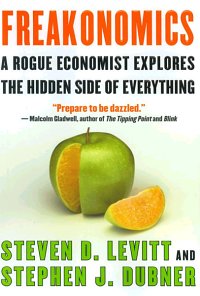
I have chosen to read "Freakonomics" by Stephen J. Dubner and Steven Levitt for my first IRB. This popular piece applies principles of economics to everyday situations such as parenting and cheating. I have been recommended this book more times than I can remember and I am finally getting it off my bucket-list. I think it will strongly appeal to my love for math and science and make for a great read!


Sunday, August 28, 2016

Okinawa: The Bloodiest Battle of All

In William Manchester’s essay, Okinawa: The Bloodiest Battle of All, he describes his experience fighting the battle off the coast of Japan during WW2 and how it has affected him. He also gives background about war and how it has evolved to what it is today. Manchester’s writing is unarguable because it is based almost entirely off his personal experience of battle as well as his life after the battle.
          This essay, although it mostly talks about the battle, is written at the time of a reunion. Manchester, along with other American Veterans who fought at Okinawa, were to meet up with veterans who fought for the Japanese. Manchester then sets about explaining why this reunion happens as well as why the tense feelings around it are the only thing the Americans and the Japanese have in common. However, Manchester’s ultimate purpose in writing this essay is one that seems synonymous in almost every veteran’s writing: bearing witness. He wants to tell the younger audience what war is really like. Manchester goes to great lengths to describe what he thinks is a horrible attitude he sees in America. He talks about the parades he sees and how the “myths of warfare are embedded deep in our ancestral memories.”
          The most important rhetorical device in the essay by far is the allusion to Sands of Iwo Jima. Manchester makes his essay about spreading the truth of war and the dramatic 1949 film is everything he, as well as all his fellow veterans, have grown to hate. This film depicts the war in such an embarrassingly dishonest manner, that when the star, John Wayne, appears at the hospital where Manchester and other gravely wounded veterans are, they boo him out before he could even make a statement. Sections of the essay like this make it seem like it was written for other veterans. Surely veterans who saw battle could laugh and clap at that story but to others, it is slightly depressing to read about someone getting booed out by a bunch of wounded veterans. Nonetheless, Manchester perfectly executes his purpose. He exposes the “myths of warfare.”

via pinterest.com Andy Noble
Fighter Jets fly over football stadium while the fans show their enthusiasm for the killing machines.

"...they regard uniforms, decorations, and Sousa machines as exalted, and those who argue otherwise are regarded as unpatriotic."

The Creation Myths of Cooperstown

Stephen Gould wrote The Creation Myths of Cooperstown for the Natural History Magazine. As a Harvard Graduate working in paleontology and evolutionary biology, Gould has had plenty of experience dealing with creation myths. Gould begins his essay by explaining an incident in which a man named George Hull created a huge man out of gypsum, buried it underground, pretended to discover it, and told everyone he had found some sort of biblical being. He then explains that a disappointingly large portion of the public fell for this. Gould then compares this to the creation myths of baseball. He explains that it is ridiculous to say that baseball was invented at one point in time. Baseball simply evolves.
          Upon reading this essay, the author’s frustration is evident.. He is frustrated with the baseball creation myth but also probably with a much larger creation myth in the book of genesis. Gould debunks the creation myths of baseball, and also the one of the Cardiff Giant, to reveal how uncritical the public is, and maybe the reader too. Gould is not a baseball historian; he is an evolutionary biologist. This essay is a mere example in Gould’s much bigger argument against the creation story of the bible. He reveals this near the end of the article by diving into Darwinian evolution.

          The way in which Gould makes these arguments is interesting. First, there is the indirect allusion to the “Bible vs Science Debate,” which he references when he draws “contrast between creation and evolution stories of baseball.” However, baseball is not the true focus of the essay, and neither is the Cardiff Giant. This makes the majority of the essay seem like mere anecdotes, or at least extended metaphors. The true creation myth of Genesis is comparable to the creation myth of baseball, and Gould uses the myths of baseball and the Cardiff Giants, which we know to be false, to show that anyone choosing the bible over modern science could be falling for a massive trick. It would be impossible to argue against that.

via ebay.com
The evolution of baseball.

The Disposable Rocket

             John Updike’s The Disposable Rocket describes what it is like to live in an ageing man’s body. He discusses the struggles and the advantages of the male body and compares them to those of a female’s body as well as how both bodies gradually betray their owners. He also delves into the mental differences and how the genders vary in thought. The writer, John Updike, has had the honor of working alongside many famous authors including J. D. Salinger, Henry Green, and James Joyce. Updike himself won the National Book Award, the National Book Critics Circle Award, and the Pulitzer Prize for Fiction in 1980 for his book Rabbit is Rich.
          When Updike wrote this essay, he was on the receiving end of his body’s betrayal. As a 59-year-old man, Updike realized that his body had begun to give up at his expense. Updike wrote this essay to make younger readers appreciate their bodies while they can, and to take care of them. Another reason he may have wrote it is to explain the experience of being a man to women reading the essay. Since nearly everyone will only ever experience what it’s like to be one gender, it can be very helpful to gain understanding of the other. For these reasons, Updike was likely writing towards a younger audience. An older man reading this essay would not learn as much, but may enjoy it as they could relate to Updike’s struggles.
          Most of the essay is an onslaught of literary devices. In the very first sentence, Updike describes inhabiting a man’s body as “much like having a bank account.” He concludes with the analogy of a man and his body being like a boy and his buddy with his parents’ car keys, you’re “just along for the ride.” These metaphors and analogies make Updike’s claims easier for the reader to understand. While the way he describes ageing is powerful, his comparisons between male and female bodies are questionable. No one has substantial credibility to speak on the other gender’s behalf.


via reddit.com u/slivr33

"Any accounting of male-female differences must include the male’s superior recklessness, a drive not, I think, toward death, as the darkest feminist cosmogonies would have it, but to test the limits, to see what the traffic will bear—a kind of mechanic’s curiosity"