Monday, February 20, 2017

TOW #19: The Press Conference (visual)

              This political cartoon was created by Clay Bennett of Chattanooga, Tennessee for the Times Free Press. It is one of Bennett’s hundreds of political cartoons. This particular one was published on February 17th. This was the day after Trump gave his first press conference as president of the United States. The cartoon depicts the press conference, but Trump himself is lying on a couch in front of the microphone as if he were speaking to a therapist. Meanwhile, the audience is furiously taking notes. This cartoon is commenting on Trump’s behavior at the conference and stating it was similar to the behavior of someone who should see a therapist.
              The metaphor of Trump as a therapist’s patient is the result of a few interactions he had at the press conference with the audience. One of the most notable ones was when Trump responded to a question by stating that his victory in the presidential race was the biggest since Ronald Reagan’s. An audience member was quick to reference Obama’s victory, which was by a much larger margin than Trump’s. Trump, who has seldom been confronted about his inaccurate statements, then doubles down by stating that it was the biggest republican victory since Ronald Reagan. The audience member refutes this as well by referencing George H. W. Bush’s victory, which was also larger than Trump’s. Trump then responds by saying that someone told him his was the biggest and that is why he thought it was the biggest. This pattern of denial and dishonesty is somewhat reminiscent of a psychopath and is why Bennett felt the need to depict Trump in a therapist’s couch.

              If the intention of the author had been to make Trump seem psychotic, then it was unsuccessful. It does not add to the context in which it was created. If, however, the author intended to simply mock Trump, he had more success in doing so. The cartoon helps to immortalize a moment of madness from an event that put it on display.


Sunday, February 12, 2017

TOW 18: We Need To Build More Startups Like Tesla (argument #1)

              This article was written by Babur Habib, CEO of Portfolio School and contributor to Forbes.com. The article discusses the success of Tesla and similar companies and why they are favorable over other successful companies. Previously, the manufacturer would get their product to the customer through a network of middlemen. Now though, companies are taking over the whole route by themselves. Tesla, for instance, builds cars in their own factories (that they built), using batteries that they built, and sells them through their own company dealerships to customers. Habib argues that this model is superior to the old one because it allows customers more personalization in their experience. Tesla offers more customizability than any other car manufacturer, for example. Habib calls these companies “full-stack” companies.

              While there are definitely advantages to full-stack companies, such as the customer personalization that Habib talked about, they also carry certain downsides with them. Firstly, the reduction of middlemen decreases job opportunity. The factory companies and dealerships that were paid by Mercedes and BMW, were not paid by Tesla. Of course, those workers could get a job at Tesla, but this is another problem in itself. Many of the workers have no place at Tesla. Other companies that Habib identifies as full-stack are Uber (who takes jobs away from taxi-drivers) and Airbnb (who puts hotels out of business). The idea that full-stack companies are objectively good comes from a very narrow perspective, the perspective of the direct consumer. This is a little bit like saying piracy is good because you can get movies and TV shows for cheaper. Yes, it is good for the person clicking “play” but in the broader picture, it does much more damage. Full-stack companies have found a way to further exploit an ever-more desperate lower class. They are good, but only when you are giving them your money.

http://www.forbes.com/sites/baburhabib/2017/02/06/we-need-to-build-more-startups-like-tesla/#10b9bf1a19a1

Wednesday, February 8, 2017

IRB Intro #3

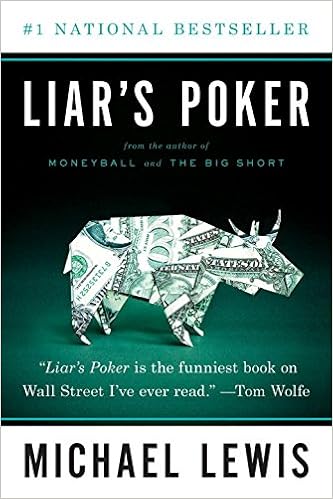
Over the course of marking period three, I will be reading "Liar's Poker" by Michael Lewis. This semi-autobiography describes the life of a high-frequency trader on Wall Street. Lewis himself was a trader in the late 1980s and he tells his story through this highly-acclaimed book. I find the idea of high-frequency trading interesting and I reading a first-hand account of the experience sounds very intriguing. 

Image result for liars poker

Sunday, February 5, 2017

TOW 17: Why we should free violent criminals

https://www.bostonglobe.com/ideas/2017/02/05/why-should-free-violent-criminals/HK8zo5OMtsMjhhQuXySuDM/story.html

This article was written by David Scharfenberg for The Boston Globe. Scharfenberg is a graduate of Brown University and was responsible for covering events such as the 2013 Boston mayor race and the 2014 governor-race. This particular article highlights the flaws in the American prison system. The Author argues that many of the problems come from the treatment of violent offenders, and he proposes new changes to the system. The Author makes it clear in the beginning that a quarter of the world's prisoners are in America (only 5% of the world’s population) and that prison populations are higher now than in 1970, despite crime rates being much lower.
One way the author argues his claim is with facts. Firstly, he dismisses the idea that the overpopulation of prisons is due to the war on drugs. He presents a statistic that shows only 20% of prisoners being drug offenders. He even says “Free them all tomorrow, and the United States would still have the largest prison population in the world.” Perhaps the best statistic he uses for arguing his point is the fact that prosecutors were twice as likely to seek jail time for the offender in 2008 than in the 1990s. However, the author uses more than just data, he uses anecdotes. He tells the story of Christopher, who stole 30 computers, and his prosecutor who let him off the hook. Christopher went on to earn a college degree and when he saw his prosecutor at an event he hugged him and said, “you changed my life.” This story demonstrates the need for opportunities for redemption for prisoners.

The author’s argument is very effective. Not only does he identify the problem and the source, but he explains how it can, and should, be solved. One cannot argue neither the data nor the instances of redeemed prisoners that Scharfenberg references. He shows that it is time for America to let the condemned redeem themselves.

Sunday, January 22, 2017

TOW 16: "Maus" by Art Siegelman, Part 2.

              In the second half of Art Spiegelman’s “Maus,” he continues to tell the story of his father, Vladek, and his holocaust experience through visual texts and rhetoric. The events included in this section include Vladek’s release from a Nazi PoW camp, his attempts to hide himself and his family from the Nazi Gestapo, and his attempted escape to Hungary. The fact that this novel is derived from first-person accounts, as well as visual texts, makes for a reading experience much more powerful than it would otherwise achieve.
              Like many WW2 novels, this novel is aimed at bearing witness to the atrocities of the war, specifically, those committed against civilians. The graphics and visuals make it evident that this novel is targeted at a younger generation, a generation that may not have experienced the fear or hysteria that Spiegelman’s father had. Very few holocaust survivors remain, but Spiegelman’s interpretation of his father’s story is able to carry on the message.

              In addition to the ongoing extended metaphor of the Jews as mice and the Nazis as pigs and cats, Spiegelman implements visual representations in the second half. One example occurs on pg. 125. After Vladek’s neighborhood is emptied by the Nazi’s (they took all the Jews to concentration camps while Vladek and a few others successfully hid in secret places), the cartoons depict the roads in the shape of a swastika. This symbolizes how the Nazi’s did not only rob the Jews of their physical possessions and, in some cases, their lives, but they also transformed their identity and the way people think. This is also evident in the way the children chant “Heil Hitler.” Overall, the rhetoric is extremely powerful. Very few novels depict the genocide with the level of empathy that “Maus” does. It goes beyond being an eyewitness account, it puts the reader in the Jew’s place.

Monday, January 16, 2017

TOW 15: "Explosive Speed" Nike Advertisement (Visual Text)

              This advertisement features Neymar, one of the popular soccer players in the world, wearing the (then) new Nike Mercurial Vapor 8s. While explosions come from his footsteps, the slogan “explosive speed” is written beside him. The creators of this advertisement were the most shoe brand in the world, Nike.
              The audience intended for this advertisement is clearly soccer players. Who else would buy soccer cleats? The potential customers are supposed to look at the explosions coming from Neymar’s feet and think “Those cleats will make me run faster!” and look at Neymar himself and think “I want to be like him, so I should buy the cleats he wears.” This ad was launched at the same time as Nike released the Mercurial Vapor 8s. At the time, these were their latest soccer cleats. In order to attract the attention of customers, Nike employed rhetorical devices like hyperbole and ethos. The phrase “explosive speed” written on the side of the advertisement, along with the explosions under Neymar’s feet, are used to indicate that the wearer will be able to accelerate faster hen wearing these particular cleats. Explosions can expand at rates of up to 10,000 meters per second, much faster than a human could ever imagine running, and so this is a hyperbole. Nike also employs the ethos of Neymar. They try to imply that if Neymar uses these cleats and he is one of the best players in the world, then we should use them too.

              Nike’s add, while striking and admirable, is not very effective. Most of the audience knows that the only reason Neymar is wearing Vapor 8s is because Nike paid him too, and that does not make them any more appealing. Also, the “explosive speed” slogan is somewhat meaningless. The advertisement provides nothing to indicate that the cleats will actually make an athlete run faster. This advertisement is, like most of Nike’s, a way for them to flex their financial muscle.

Sunday, January 8, 2017

TOW #14: Bernie Sanders and the Defeated Democrats (Visual Text)


               This cartoon features a trio of defeated donkeys (democrats) pondering how it would have been possible for them to win the election when their opponent, Donald Trump, was so good at connecting himself to the working class. While they conclude that nothing could be done, a worn and tattered poster of Bernie Sanders eyes them from a building behind them. The artist behind this cartoon is David Horsey, a graduate of the University of Washington and a two-time winner of the Pulitzer Prize.
               Shortly after Hillary Clinton seized the Democratic Party’s nomination, it was revealed that the DNC intentionally rigged its primaries in her favor, and against Bernie Sanders. When Clinton lost the general election to Donald Trump, many pointed fingers at the DNC for nominating an “unelectable” candidate. Horsey’s cartoon expresses an idea that Sanders, who had shown fantastic skill at uniting himself with the people, would have fared better against Donald Trump than Clinton. Horsey uses this cartoon as an attack towards the DNC. In their effort to keep the nomination away from Bernie Sanders, they only hurt themselves.

              The artist uses dramatic irony in this cartoon to portray how obvious the DNC’s wrongdoings were. The donkeys, representing democrats, are wishing that Clinton had qualities that were specific to Sanders. If they knew that Sanders was watching them from the poster behind them, they wouldn’t be complaining. I think this cartoon is effective for a few reasons. Firstly, Clinton lost to Trump, this means the DNC’s evil paid off to nothing. Also, the leak showing that the DNC rigged its primaries hurt their nominee. Few people want to vote for someone who they felt was “cheating” in their campaign. Lastly, the cartoon emphasizes how Bernie’s advantages mirrored those of Trump, and how the DNC ignored the general anti-government feelings swelling in American voters.